
YOUR CART
- No products in the cart.
Subtotal:
$0.00
BEST SELLING PRODUCTS
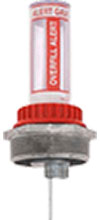
Uncontrolled releases from Aboveground Storage Tanks (ASTs) impose severe financial and environmental penalties on operators. Facility managers must implement robust spill prevention measures to safeguard public safety and maintain operational integrity. A single, catastrophic overfill event can generate millions in cleanup costs and trigger massive federal fines. The reliable Overfill Alert Gauge (Type OF) constitutes a non-negotiable component of any credible spill prevention strategy.
Regulatory bodies, including the Environmental Protection Agency (EPA), strictly enforce compliance with the Spill Prevention, Control, and Countermeasure (SPCC) rule. This federal mandate requires owners or operators of bulk storage facilities to install reliable warning systems and proper operating procedures. Non-compliance often results in fines reaching tens of thousands of dollars per day, significantly impacting a company’s balance sheet. Industry best practices, specifically outlined in American Petroleum Institute (API) Recommended Practice 2350, further define the accepted protocols for preventing tank overfills in petroleum facilities. This standard dictates that bulk liquid terminal operators should employ a three-tier defense system, mandating reliable high-level alarms to initiate proper emergency response procedures. Facility engineers must determine alarm set points based on tank category, rate of filling, ullage, etc., per API 2350.
Your Takeaway: Understand your jurisdictional requirements and establish mandatory alarm set points below the 98% tank capacity level as defined by relevant industry standards and local fire codes.
Mechanical float gauges may offer advantages, but the key is an independent detection system as required by API 2350, and the choice of technology must fit the tank, product, risk category, etc. Kreuger Sentry’s Type OF Overfill Alert Gauges offer mechanical simplicity coupled with unparalleled reliability for continuous tank level monitoring. These specialized gauges provide both local indication and remote signaling capabilities, functioning independently of complex electronic tank gauging systems. The gauge utilizes a float mechanism connected to a sensing head, detecting rising fluid levels based on principles of displacement and hydrostatic pressure. Once the fluid surface reaches the pre-determined, critical high-level set point, the float actuates a switch within the gauge head. This activation triggers an immediate, unambiguous warning through a combination of audible and visual alarms, alerting transfer personnel to terminate the loading operation immediately. Complex storage environments demand a multi-tiered defense strategy, integrating the mechanical reliability of a Type OF gauge with other level detection technologies. Engineers ensure maximum safety and compliance by layering safeguards, thereby eliminating the single point of failure inherent in relying on only one monitoring system. The Type OF gauge’s direct mechanical action provides a simple, intrinsically safe means of level detection, making it an optimal final line of defense.
Your Takeaway: Implement a multi-tiered defense strategy using distinct, reliable level detection technologies, like the mechanical Type OF gauge, to eliminate single points of failure across your AST inventory.
Compliance with SPCC means you must have a plan and prevent discharge; the specific instrumentation is usually guided by industry standards (API 2350, NFPA 30) and risk-based decisions.
An adequate Overfill Prevention System (OPS) requires a reliable means of deterring or detecting high-level conditions, typically achieved through automatic shutoff or a high-level alarm. Type OF gauges directly address the alarm component of this regulation, providing the critical, timely notification necessary to prevent an overflow event. Their mechanical design offers an intrinsically safe solution, functioning reliably even when primary power systems fail during a transfer. Tank owners routinely perform thorough inspections and calibration checks on their level detection equipment as a critical operational safeguard. Facility managers must conduct regular physical inspections, ideally on a monthly basis, and calibrate all gauges per the manufacturer’s specifications and the established SPCC plan guidelines. Kruger Sentry produces numerous product options designed to meet various tank sizes and chemical compatibilities, ensuring robust compliance across your entire tank farm.
Explore our available Overfill Alert Gauges to find the system that best protects your assets and satisfies all regulatory requirements:
Your Takeaway: Conduct regular physical inspections and calibrate all level detection equipment per manufacturer and SPCC plan guidelines to ensure operational accuracy and reliability.
Investing in a robust overfill prevention system is not merely a cost; it represents an essential investment in environmental stewardship and financial resilience. The precise, timely warnings from a Kruger Sentry Type OF gauge enable operators to prevent devastating spills, protecting both the environment and the company’s reputation. Proactive adoption of these systems shields your operation from costly downtime, cleanup expenses, and debilitating regulatory fines. Protect your facility and achieve verifiable AST compliance by specifying a reliable mechanical overfill alert gauge today.
View our certifications and contact our team for more details.



Contact our team of experts today. Fields marked with * are required.
"*" indicates required fields
Locate a Krueger Sentry Gauge Distributor