
Chemical Resistant Level Indicator
Instrumentation designed to measure liquid levels is essential to ensure both safety and efficiency for companies in the chemical industry. Krueger Sentry Gauge is here to provide such instrumentation. For over 75+ years that we have been in business, safety, and reliability have been our primary concerns. We use components produced by us or other American manufacturers to comply with the Buy American Act. It’s with these materials that we produce a significant variety of both stainless steel and plastic chemical gauges that include:
Chemical Liquid Level Gauge Applications
Stainless steels, specifically 316L, are the most frequently used materials for gauges, however, certain kinds of plastic and other chemically-resistant materials may also be employed. This depends on the application that the gauge is being used for. Given the sheer number of applications, it can be helpful to have experts to guide you. Our experience is what sets Krueger Sentry Gauge apart from our competitors. It allows us to offer insight into both gauge material and type to meet the requirements of specific applications. Some of these include:
- Injection
- Chemical Reactors
- Chlor-Alkali Process
- Deionization Tanks
- Distillation Towers
- Fermentation Vessels
- Liquid Extraction
- Liquids Storage
- Mixing and Blending Systems
- Neutralization
- Scrubber Vessels
- Surge Drum
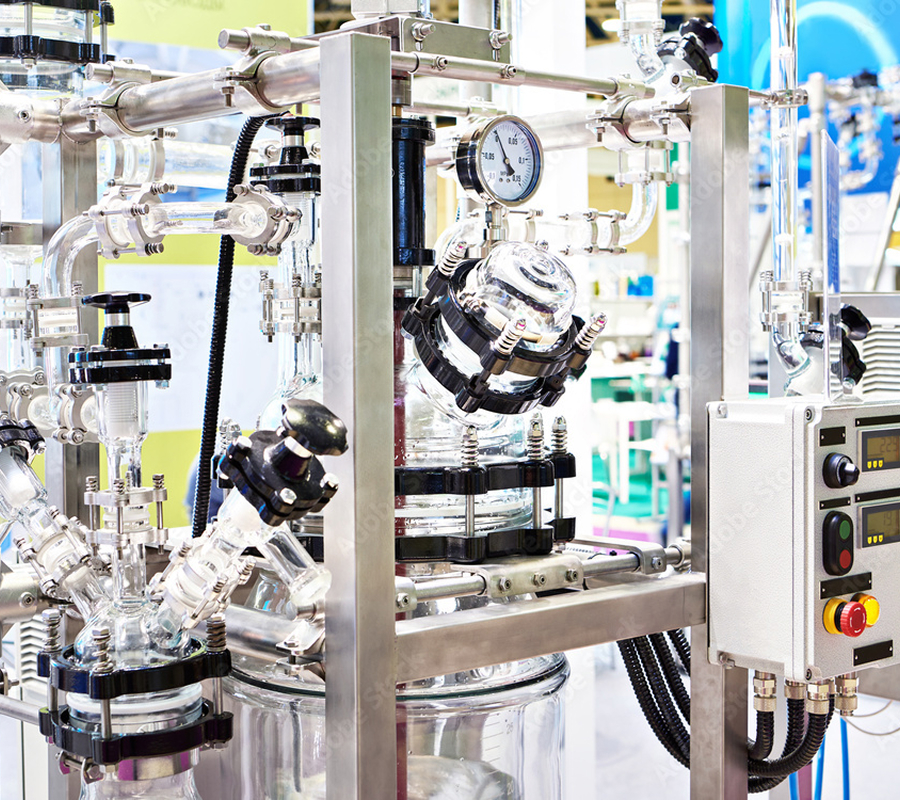
Chemically Resistant Tank Level Gauges
Often, the chemicals used within these applications are corrosive. Therefore, companies within the chemical industry are required to adhere to thorough international guidelines like EN13922, PED, and ATEX. We at Kruger Sentry Gauge understand that these regulations ensure that both procedures and equipment are safe and systematic to protect the employees and environment. Our tank gauges are designed and manufactured with this fact in mind. They are equipped to work with chemicals that include:
Sulphuric Acid Level Gauge Solutions
When storing sulfuric acid, traditional metal gauges corrode quickly — leading to inaccurate readings, safety hazards, and costly downtime. Krueger Sentry Gauge’s corrosion-resistant plastic liquid level gauges eliminate that risk, delivering consistently accurate measurements with no maintenance headaches.
Bleach/Sodium Hypochlorite
Sodium hypochlorite is a powerful oxidizer that attacks metal fittings and eats away at standard gauges from the inside out — leading to drift, leaks, and premature failure. Krueger Sentry Gauge’s chemically resistant plastic liquid level gauges stand up to bleach, holding accurate readings shift after shift with virtually no upkeep.
Hydrochloric Acid Tank Level Gauges
Hydrochloric acid is aggressive enough to pit and corrode even stainless steel, quickly compromising metal gauges and the safety of everyone working around the tank. Krueger Sentry Gauge’s corrosion-resistant plastic liquid level gauges resist HCl attack, delivering dependable, precise measurements without the constant maintenance metal demands.
Chlorine Tank Level Gauges
Chlorine becomes highly corrosive in the presence of moisture, eating through metal gauges and creating serious safety risks around storage tanks. Krueger Sentry Gauge’s chemically resistant plastic liquid level gauges are built for chlorine service, providing consistently accurate readings and a long, maintenance-free service life.
Acetone
Acetone is an aggressive solvent that can soften, swell, or break down the wrong gauge materials — turning a routine level reading into a leak or an outright failure. Krueger Sentry Gauge matches each application to the right construction, recommending stainless steel gauges that shrug off acetone and keep measuring accurately for the long haul.
Caustics / Sodium Hydroxide
Sodium hydroxide and other caustics are highly corrosive bases that eat away at aluminum and many standard metal fittings over time. Krueger Sentry Gauge’s chemically resistant gauges are built to handle caustic service, delivering reliable, accurate level readings without the corrosion and downtime caustics normally cause.
Potassium Hydroxide
Potassium hydroxide is a strong caustic that attacks aluminum, zinc, and other common gauge materials, threatening both accuracy and worker safety. Krueger Sentry Gauge’s chemically resistant liquid level gauges stand up to KOH, delivering dependable measurements and a long, maintenance-free service life.
Built for an Industry That Keeps the World Running
The chemical industry is a central element in the world economy. It consists of companies that convert raw materials such as oil, natural gas, air, water, metals, and minerals into over 70,000 different products—primarily polymers and plastics. The most common of these include polyethylene, polypropylene, polyvinyl chloride, polyethylene terephthalate, polystyrene, and polycarbonate. These products are used in a wide array of consumer goods, as well as in agricultural manufacturing, construction, and various service industries. Rubber and plastic products, textiles, apparel, petroleum refining, pulp and paper, and primary metals are the most prominent industrial customers. Globally, the chemical industry is valued at close to $3 trillion. At Krueger Sentry Gauge we are proud that we can help make this industry both safer and more profitable each year.

Frequently Asked Questions
Got questions? Get answers instantly by browsing our FAQs below, chatting with our AI assistant, or reaching out to our team directly.
What do we use as a part number?
At Krueger Sentry, we don’t use classic part numbers. Everything is description-based. Refer to your product’s Spec Page (materials options) and the Order Info (tank measurements) page for more information. Example Part Number: – H-2-48 + 12 w/glass (H signifies the type of gauge, 2 is the size opening, 48 is the tank depth, 12 is the extension, and everything after that is the options you want to be included.
Which liquid level monitor is the right choice for me?
When choosing a liquid level gauge, different factors can change which sight gauge is best for you. The basic factors that motivate people to buy each type of gauge are as follows.
- Economical sight gauge- At-A-Glance Direct Reading
- Versatile sight gauge- Therma Gauge
- Small tank monitor, under 12 inches – The L Gauge
- Standard Barrel Level Gauges – Barrel Gauge
- Up to 12 feet of mechanical remote capability – Remote Reading Gauge
- Durability – GFK Gauge – you can achieve this durability by ordering a therma gauge with a gauge guard as well.
How do I find or locate a Krueger Sentry Gauge distributor?
Search our Preferred Distributor Page. Don’t see a distributor you want to use? Call me. Lee Geurts: 920-434-8860 ext 204
Which sight gauge do you recommend most often to your customers?
I try to sell the Therma gauge to most people. It is nearly as inexpensive as the At A Glance Gauge, but you have more control over your swing arm. Plus, this level gauge can be fitted with the most options.
What is the difference between the Type D At a Glance Level Gauge and the Type H Therma Level Gauge?
The Swing arm on the Type D Gauge is fixed. When you thread in the gauge, the swing arm spins inside the tank and will end up facing in a random direction. The swing arm on the Type H Gauge can be aimed in the exact direction you want it to swing, and when you thread the gauge in it does not spin inside the tank.
How long is the swing arm on a level gauge?
The arm is always half the depth of your tank.
How do I order a custom-size level gauge?
In order to get an accurate gauge for your tank, we take two measurements into consideration. First, we measure, in inches from top to bottom, what the distance is from empty to full, known as tank depth. Second, the distance from the full mark to the gauge fitting on top is also known as an extension length. Sometimes this measurement comes out to zero.
How do I prevent my tank gauge from getting damaged by the sun and weather?
Ordering upgraded options such as Solid Glass Tops and Gauge Guards will make your Krueger Gauge nearly impervious to weather, sun, and damage.
Can I repair just the top of my Tank Gauge, or do I need to replace the whole thing?
If your gauge still seems functional, you can replace just the top components by ordering the corresponding repair kit. Repair Kits are available for all gauge types and come in a variety of material options for added durability, which can be found in the Tank Gauge Accessories.
What is the recommended maintenance/testing for Krueger Leak Gauges?
Krueger Sentry provides a Leak Gauge Functionality / Calibration Testing Report with inspection procedures for inspectors/technicians. Please contact us with any questions.