YOUR CART
- No products in the cart.
Subtotal:
$0.00
BEST SELLING PRODUCTS
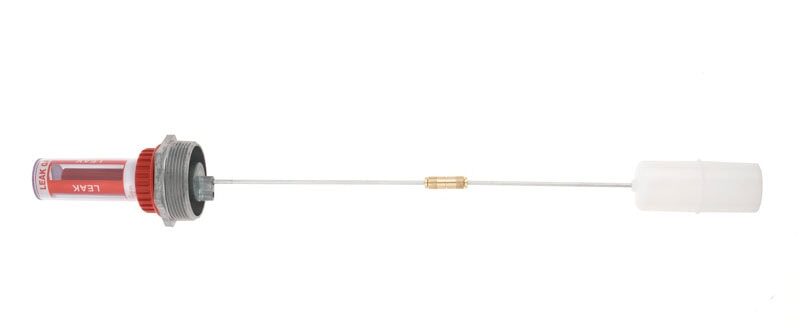
Across industrial, commercial, and utility sectors, double-wall tanks remain a trusted solution for storing fuels, chemicals, and other regulated liquids. Their dual-wall design provides a critical layer of secondary containment—but the true frontline of protection lies within the interstitial (annular) space between those walls. A breach in the primary tank wall sends product directly into this cavity, creating an early warning opportunity that operators cannot afford to miss. Without reliable monitoring, that first sign of failure can go undetected until structural integrity is compromised and environmental release becomes a real threat.
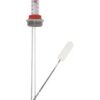
Krueger Sentry Gauge’s Type K hydrostatic leak detection system gives operators a durable, non-electronic way to continuously indicate interstitial status and catch containment failures early—before damage escalates.
In the United States, EPA’s 40 CFR Part 280 requires underground storage tank (UST) systems to implement approved release-detection methods—including interstitial monitoring for secondarily contained systems. Many state and local regulations also apply similar principles to aboveground tanks (ASTs), often referencing codes such as NFPA 30 for safe storage practices. Across all jurisdictions, the message is clear: early detection in the interstitial space is essential for preventing environmental harm and avoiding operational risk.
When a primary wall leaks, product first accumulates within the interstice. If this early signal is ignored, the stored liquid can migrate, attack the secondary wall, or escape through penetrations—potentially resulting in soil or groundwater contamination.
And the financial stakes are real. Cleanup costs for significant releases commonly range from tens of thousands to low six figures, according to EPA-cited corrective-action studies. Add regulatory penalties for non-compliance, and the cost of missing an early interstitial alert quickly becomes substantial.
Your Takeaway: Establish and follow a formal schedule for checking all interstitial monitoring equipment. Many regulatory frameworks for USTs require interstitial monitors to be checked at least every 30 days, and frequent inspection is considered best practice for all double-wall tanks.
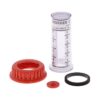
The Krueger Type K hydrostatic leak detection gauge provides a clean, mechanical approach to monitoring the space between tank walls—no wiring, no electronics, and no power required.
Here’s how it works:
This displacement causes an immediate, visible level change on the gauge. When operators incorporate routine visual checks—as required for many regulated UST systems—this method delivers dependable early warning of containment failure.
Your Takeaway: Ensure the selected Type K gauge is compatible with both the stored product and tank construction. The hydrostatic fluid must remain stable across your expected temperature and service conditions.
Krueger Sentry Gauge designs Type K hydrostatic leak detectors for real-world industrial service:
For facilities handling regulated liquids, integrating a Type K gauge into your Asset Integrity Management (AIM) strategy delivers safer operations, clearer compliance pathways, and reduced lifecycle costs.
Your Takeaway: Incorporate visual verification of the Type K gauge into your broader tank inspection routine. Align monitoring frequency with EPA UST requirements, applicable state AST regulations, and codes such as NFPA 30 where adopted.
Contact us today to discuss your needs or request a quote. Our team is ready to help you find the best solutions for your storage systems.
View our certifications and contact our team for more details.



Contact our team of experts today. Fields marked with * are required.
"*" indicates required fields
Locate a Krueger Sentry Gauge Distributor